 English
  Portuguese
  Spanish
  Hungarian
  Indonesian
  Italian
  Persian
  Polish
  Turkish
  Ukrainian
  Yiddish
  Yoruba
  Japanese
  Dutch
Dutch How to Choose a Distortion-Free Mirror for Flawless Makeup
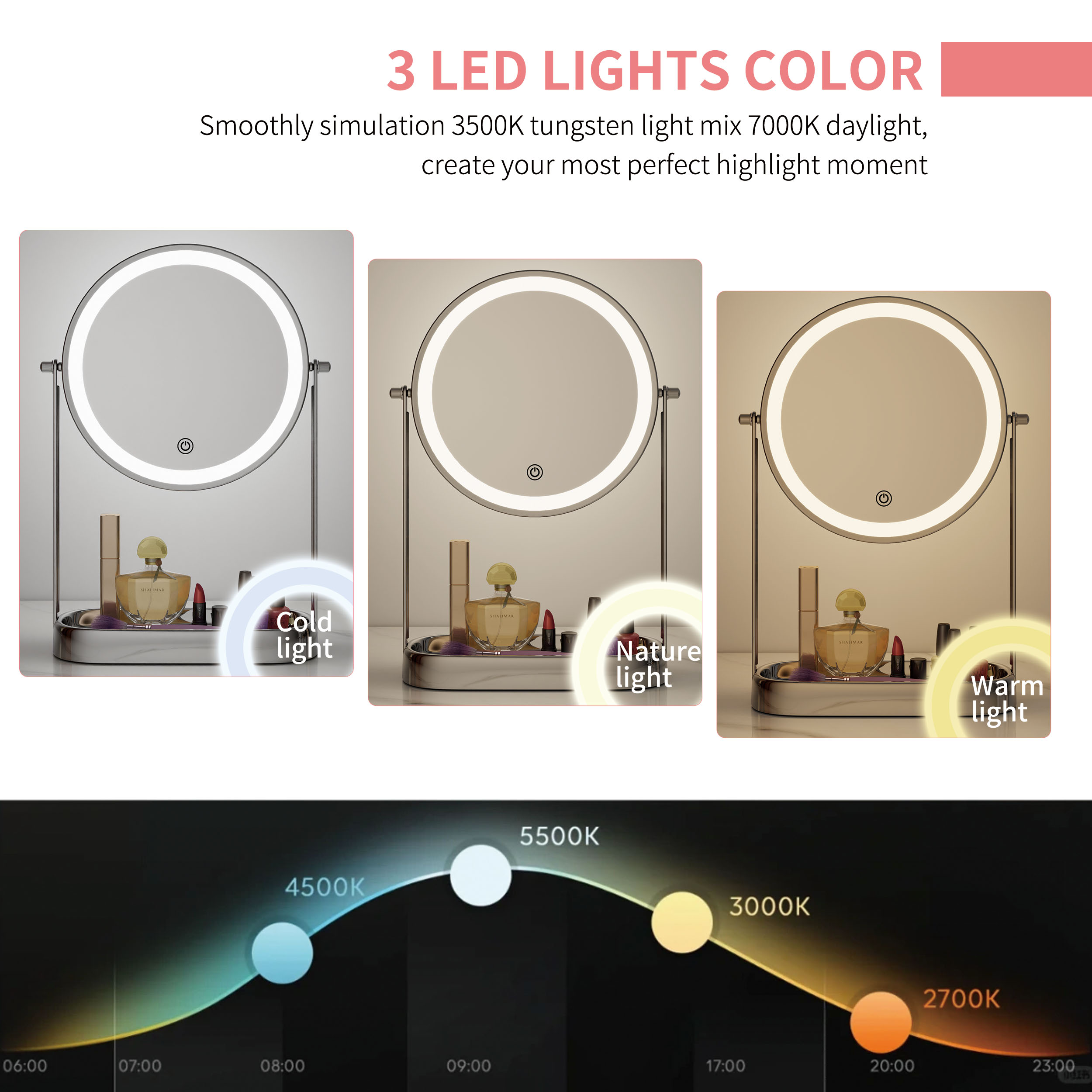
When it comes to applying makeup, the quality of the mirror you use is just as important as the products themselves. A distorted mirror can throw off your makeup routine, making it difficult to achieve the desired look. In this article, we will explore what causes distortion in makeup mirrors, how to identify a good-quality mirror, and provide tips on maintaining its clarity so you can always apply your makeup flawlessly.
What is Distortion in a Mirror?
Mirror distortion occurs when the reflection you see is altered in some way. This can include bending, warping, or uneven reflections that don't accurately represent your face or features. The most common types of distortion include barrel distortion (where edges curve outwards), pincushion distortion (where edges curve inward), and wave distortion (which creates a choppy, wavy reflection). These distortions can make it difficult to apply makeup properly, especially when precision is key.
Types of Mirror Distortion and How to Spot Them
Understanding the types of distortion can help you choose a mirror that provides a clear and accurate reflection. Here are the three most common types:
Barrel Distortion: This causes straight lines to appear slightly curved outward, often making objects and faces appear wider.
Pincushion Distortion: The opposite of barrel distortion, this causes straight lines to bend inward, making faces appear narrower.
Wave Distortion: This occurs when the mirror’s surface is uneven, creating a rippled or choppy effect on the reflection.
How to Choose the Best Mirror for Clear Reflections
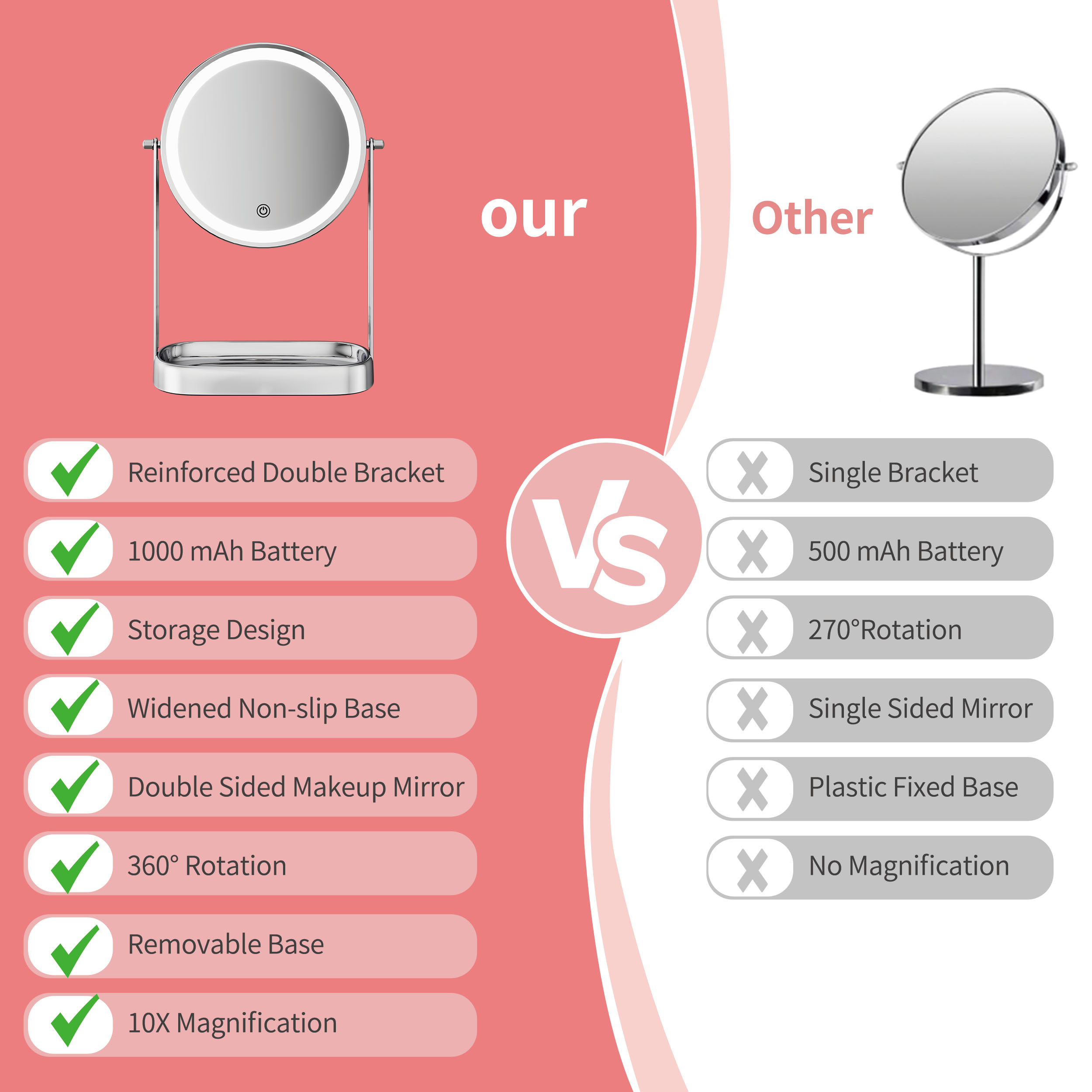
When selecting a makeup mirror, it’s important to choose one that offers the clearest possible reflection. Here are a few tips to help you make the best choice:
Material Matters: Opt for high-quality glass or acrylic. Glass mirrors are the best option for clarity, as they provide a true reflection without the risk of warping over time.
Check for Distortion: Before purchasing, test the mirror for distortion. Look at a straight line, such as the edge of a piece of furniture, to see if it appears straight or bent. If you notice any bending, it's best to move on to another mirror.
Magnification: Magnifying mirrors offer a more detailed view of your face and features, which is great for precise makeup application. However, make sure the magnification doesn't distort the reflection too much.
How to Maintain Your Mirror’s Clarity
To ensure that your mirror stays crystal clear and free of distortion, it’s important to care for it properly:
Regular Cleaning: Use a microfiber cloth and gentle glass cleaner to wipe down your mirror regularly. Avoid harsh chemicals that can damage the surface.
Proper Handling: Be careful when moving or adjusting your mirror. Dropping or rough handling can cause small cracks or distortions.
Keep in Stable Conditions: Avoid placing your mirror in areas that experience extreme temperature or humidity changes, as this can lead to warping over time.
Recent Posts
- Engineering Lifecycle Value: Commercial Bathroom Mirror Durability and Compliance Standards
A technical guide for procurement managers on commercial mirror standards, covering UL 962 compliance, corrosion resistance, and structural safety requirements.
09/28/2026
- Sourcing Premium Vanity Mirrors: A B2B Guide for Hospitality Procurement
Learn how to specify commercial-grade LED mirrors for hospitality projects. Focus on copper-free glass, thermal management, and ISO 9001 quality standards.
09/28/2026
- Technical Procurement Guide: Custom Large-Scale Vanity Mirror Engineering for Luxury Hotels
A technical procurement guide for high-end hospitality vanity mirror engineering, covering structural integrity, IEC compliance, and smart mirror life-cycle management.
09/28/2026
- OEM vs. ODM: Strategic Partnering for Custom Lighted Mirror Manufacturing
Compare OEM and ODM manufacturing for lighted vanity mirrors. Learn how to choose between speed-to-market and proprietary design for your hospitality projects.
09/28/2026
- Engineering Spectral Accuracy: A B2B Guide to High-CRI LED Integration for Commercial Makeup Mirrors
Technical procurement guide for high-CRI LED mirrors. Learn about R9 values, IES TM-30-20, and SDCM < 3 binning for professional beauty studio fit-outs.
09/28/2026
- Designing Professional Lighted Vanity Mirrors: Key Engineering Considerations
Learn essential engineering specifications for commercial-grade LED vanity mirrors. Ensure project reliability with guidance on thermal management and safety.
09/28/2026
- Quality Control Protocols for Articulated Makeup Mirror Hinge Mechanisms
Learn professional hinge testing standards for makeup mirrors. Our guide covers torque retention, cycle testing, and durability protocols for B2B procurement.
09/28/2026
- High-Volume Manufacturing Trends for Professional-Grade Makeup Mirrors
Learn how to source professional-grade vanity mirrors with our guide on high-volume manufacturing, electrical compliance, and modular quality control standards.
09/28/2026
- Engineering Specifications for Multi-Panel Tri-Fold Vanity Mirrors: A B2B Procurement Guide
Learn essential engineering specifications for multi-panel tri-fold vanity mirrors, including hinge fatigue testing, material science, and safety standards.
09/28/2026
- Hardwired vs. Plug-in Electrical Solutions for Hotel Wall-Mounted Mirrors
Analyze the total cost of ownership for hardwired versus plug-in hotel mirrors. Learn why hardwired fixtures reduce maintenance in high-traffic hospitality.
09/28/2026